Monday, 10 October 2011

The Real "Power" Behind Alcoholics Anonymous


AA is Faith-Based, Not Evidence-Based Is it? Did someone apply an evidence-based test to Old Testament miracles? Did someone apply an evidence-based test to the countless healings by Jesus? Did someone apply an evidence-based test to the signs, miracles, and wonders of First Century Christians? Did someone look into the evidence-based test when writing about the Evangelists like Dwight Moody, the Rescue Mission leaders like Jerry Mc Auley and S.H. Hadley, the origins of the Salvation Army founded by General Booth, the 4.5 million membership of the Young People's Christian Endeavor Society, in which Dr. Bob was active, the successes of the YMCA brethren during the Great Awakening of 1875 in St. Johnsbury, Vermont? Did someone apply the evidence based test to the complete cure by the power of God of Bill Wilson's grandfather William? Did someone apply the evidenced base test to the miraculous cure of the first three AAs when there were no Steps, no Traditions, no drunkalogs, no textbook, and no meetings like those today? Did someone really look at the documented 75% and 93% success rates in Akron and Cleveland? Let the "evidence-based" writers begin looking at documented history instead of counting the number of alcoholics and addicts wandering the slums without ever turning to God for help? It's time for those who believe in God, rely on Him, and have been healed by Him to just close the book on the "evidence-based" nonsense when it comes to the power of God. And just keep fellowshipping and witnessing with time-honored and century-old victories in the hands of God!

Friday, 7 October 2011

A wealthy homeowner cleared of any wrongdoing after stabbing to death a suspected burglar at his home

A wealthy homeowner cleared of any wrongdoing after stabbing to death a suspected burglar at his home says he has endured a 'living nightmare' and still suffers flashbacks from the incident.


Raymond Jacob, 37, suffered fatal stab wounds in a struggle at the Stockport house of courier boss Vincent Cooke on September 17.

Mr Cooke was told by the Crown Prosecution Service that he will face no further action after it concluded he was acting in self-defence. 

Today, the 39-year-old said he was 'relieved' to hear the news but said the last few weeks had been a 'living nightmare' and that he was still suffering flashbacks. 

Released: Vincent Cooke was told by the Crown Prosecution Service that he will face no further action
Stabbed: Raymond Jacob was stabbed to death after attempting to burgle a home belonging to businessman Vincent Cooke

Released: Vincent Cooke, left, was told by the Crown Prosecution Service that he will face no further action after Raymond Jacob was stabbed to death at his home 

Mr Cooke's home. His case is the third in Greater Manchester this year involving suspected raiders being killed and the CPS ruling individuals had acted in self-defence

Mr Cooke's home. His case is the third in Greater Manchester this year involving suspected raiders being killed and the CPS ruling individuals had acted in self-defence

In a statement issued through his lawyers he also thanked the public and for supporting him during this 'terrible event'.

He said: 'I am most relieved that the CPS have decided not to charge me with any offence.

'It has been a living nightmare for me and I'm still suffering flashbacks of the incident.


Madchild: not so mad after all

Now sober, the Swollen Member tackles his music with renewed creativity and determination


Madchild's back, but not back just putting out records. He's, like,back. Now sober, he's the creative and disciplined artist he was 10 years ago, before the fame, the gangs and the drugs.

He's making up for the time he lost addicted to painkillers, devoting each day to writing and recording new material. He's released one EP , Banned From America, and a mixtape M.A.D.E, which he is currently supporting on tour, with more new music on the way.

"I feel like I kind of wasted four years of my life - not kind of, I did - and now I'm trying to make every day count for four days," he says.

Madchild, born Shane Bunting, rose to prominence in Swollen Members. They were Canadian mainstays for the first third of the 2000s, perhaps best known for Madchild's nasal delivery.

After a string of successful singles and cross-Canada tours, Madchild's well-documented affiliation with the Hell's Angels (and the inclusion of patched members appearing in Swollen Members music videos) lead to Nettwerk Management dropping the group from their roster.

That incident, paired with the commercial flop of 2006's Black Magic, led Madchild into a depression he masked with painkillers. His creativity floundered. His career stalled. He lost everything - his cars, his 11 properties. All told, he says the addiction cost him $3 million.

He's been sober for just over a year but the first few months were anything but sunshine and rainbows.

"Coming out of your addiction, instead of being like 'Woo-hoo! I'm sober this is great,' you're like, 'Oh, this is the reality that I've created for myself,'" he says. "It took me to a very, very dark place. I was straight up suicidal a year and a half ago."

He threw himself into writing new material. The music became his therapy. Each verse from his recent releases is a heaving of troubling emotions, expelling every awful feeling that he had pent up throughout his drug addiction.

Paired together, Banned From America and M.A.D.E. (an acronym forMisguided Angel Destroys Everything), are like two chapters of a book documenting the life of a battered Shane Bunting, who was once riding the crest of success, and now bleeding before a world that is forcing him to confront the pain he'd been masking with pills and cocaine.

In real life, though, Madchild has found the perspective he's needed to put the past behind him and move on. He's happy to have been given another chance - not just at music, but at life.

"The last eight months have been amazing, dude," he says. "It's so rewarding. It's like I wish I could just grab people and let them see inside my head so they could see that once you get past the hard part (of recovery), how rewarding it is, how good God is, how good life is, how many rewards there are on a daily basis."

He's candid about his former gang affiliations and the hassles it has caused for him. Banned From America was written in the six days after he was barred from entering the U.S. because of his Hell's Angels connections. The event made national headlines.

Last week, Abbotsford RCMP shut down his scheduled gig over fears that the show would be a magnet for criminal activity and, in light of the recent shootings in and around the area, they didn't want to take any chances.

"You make your own bed, you sleep in it, right? Let's be honest, in videos before I have glorified certain lifestyles - and please use my exact words - I have glorified a certain lifestyle," he says.

"It was for entertainment facto," he continues, "but let's be honest. I was still glorifying a certain aspect of life and maybe I overdid it a little bit. Maybe it wasn't appropriate and I let it out, like I say now. I think I can have the same edge and still be the same crazy Madchild."

He's taken on a role-model approach to his younger fan base, working with high school liaison officers to share with students his experiences with gangs as a way to "shed some light on things."

"I know that I can relate to them more than some tactics that are made right now to try to steer kids in the right direction. I just feel like I might be able to have more of a heart to heart with kids or young adults and it might sink in a little deeper because I went in one end of the whole thing and came out the other end," he says.

But first comes his work. He's speaking to Pique from the set of an Edmonton video shoot, one of seven he has yet to release. He has enough songs for another EP and another mixtape. His debut full-length, Dopesick, is also ready for release but he says nobody will hear it until he's built enough hype for himself that people beyond the Swollen Members fan base will want to hear it.

"(Dopesick) is not going to be an explosive impact," he says. "Let's be honest. I'm not at that point in my career. Even though I'm a veteran in the game, I'm a new artist. I'm a brand new artist. I've only been a solo artist for 10 or 11 months as far as the public is concerned."

So he's going to work this second chance the best that he can. He's going to keep writing and play shows until he can't take it anymore, and then write some more. With four years wasted, it seems he'll stop at nothing to get back on top. And he has the confidence that might just take him there.

"I don't think that a lot of people have my work ethic right now," he says. "I don't think a lot of people are messing with me, lyrically, song-wise. This is my whole life. I'm putting everything, my heart and soul, into this so I don't want it to just come out and have nobody know about it."

Thursday, 29 September 2011

Global swoop nets huge haul of fake drugs: Interpol


Police and customs officers from 81 countries have seized 2.4 million doses of counterfeit medicine sold over the Internet during a one-week operation, international police body Interpol said Thursday. Fifty-five people were arrested during the September 20-27 operation, codenamed Pangea 4, and more than 13,000 websites closed down, Interpol said. More than 100,000 illegal doses were seized in France, over half of which were for supposed to be for treating male erection problems, France's medical security agency that took part in the operation, AFSSAPS, said. The operation was carried out for the fourth successive year in an effort to inform the public about the risks of buying medicines online. "Interpol's member countries and partners have shown through the success of Operation Pangea IV the Internet is not an anonymous safe haven for criminals trafficking illicit medicines," said Interpol secretary general Ronald Noble. The agency said it had targeted Internet service providers, online payment companies and delivery companies during the operation, in order that the whole supply chain of fake drugs be broken down. "We cannot halt the illicit online supply of medicines without a consistent, constant and collective international effort involving all sectors," said Aline Plancon, head of Interpol's fake drugs department. "The operation itself was only made possible thanks to a combined effort involving the 165 different participating agencies sharing and exchanging live information via Interpol's headquarters in Lyon," she said. Interpol has also posted messages on Internet video sharing sites warning punters "Don't Be Your Own Killer" by buying unlicensed pharmaceuticals.

Thursday, 22 September 2011

Scottish supermarkets face extra tax on selling alcohol


Plans to hike business rates for major retailers of alcohol and tobacco in Scotland could see supermarkets pay around £110 million in tax over the next three years.   Finance Secretary John Swinney announced the new levy yesterday, as part of the Scottish government’s Spending Review.   Swinney said the review contained “tough choices, because of the cuts from Westminster that go too far, too fast”.   “We have had to restrict pay costs, reluctantly implement pensions increases on public sector staff, and maximise the income gained from asset sales,” he said.   He outlined that part of the extra revenue brought in would come from a tax on major retailers who sell alcohol and tobacco.   The measure was a surprise announcement, as during the last parliament a proposal to introduce a “Tesco tax” was voted down and it was not included the SNP’s manifesto.   Scottish Retail Consortium director Ian Shearer said: “This new tax is a blatant fund-raising exercise which is illogical and discriminatory. It targets a part of the retail sector which funds Drinkaware, rigorously prevents under-age sales with Challenge 25 and has led the way on clear alcohol labelling, giving it an exemplary record on the sale of alcohol and tobacco.   “Supermarket margins are already cut to the bone as stores compete to offer the best deals to cash-strapped consumers. The UK already has some of the highest alcohol taxes in Europe. This tax would make it harder for food retailers to keep prices down for customers, and makes Scotland a less attractive place to do business, invest and create jobs.”   The WSTA's Jeremy Beadles said he was "disappointed" the meaure had been announced with no consultation.   "The tax on large retailers will place an additional burden on Scottish businesses and push the price up for all consumers regardless of whether they consume alcohol at all,” he added.   “At a time of financial constraint, when many businesses in Scotland are already feeling the pinch and paying increase rates, we do not believe that punishing responsible consumers in Scotland with another tax is either fair or justified.”     Minimum alcohol unit pricing could become as reality north of the border by next summer, although the price has not yet been set. The Scottish government claims it is the “most effective and efficient way” of reducing consumption and alcohol related harm.

if arresting people for drugs was a sign of success in The War on Drugs, then I guess our government has won.

The United States arrests a lot of people on drug charges. The answer to the failure of The War on Drugs is always spend more money and arrest more people.

In fact, if arresting people for drugs was a sign of success in The War on Drugs, then I guess our government has won. Here is a press release from Law Enforcement Against Prohibition on a new report from the FBI on just how many people are arrested for drugs in this country.

New FBI Numbers Reveal Failure of “War on Drugs”

420times 000002362202XSmall 150x150 FBI: One Drug Arrest Every 19 Seconds In U.S.WASHINGTON, D.C. — A new FBI report released today shows that there is a drug arrest every 19 seconds in the U.S. A group of police and judges who have been campaigning to legalize and regulate drugs pointed to the figures showing more than 1.6 million drug arrests in 2010 as evidence that the “war on drugs” is a failure that can never be won.

“Since the declaration of the ‘war on drugs’ 40 years ago we’ve arrested tens of millions of people in an effort to reduce drug use. The fact that cops had to spend time arresting another 1.6 million of our fellow citizens last year shows that it simply hasn’t worked. In the current economy we simply cannot afford to keep arresting three people every minute in the failed ‘war on drugs,’” said Neill Franklin, a retired Baltimore narcotics cop who now heads the group Law Enforcement Against Prohibition (LEAP). “If we legalized and taxed drugs, we could not only create new revenue in addition to the money we’d save from ending the cruel policy of arresting users, but we’d make society safer by bankrupting the cartels and gangs who control the currently illegal marketplace.”

Today’s FBI report, which can be found athttp://www.fbi.gov/about-us/cjis/ucr/crime-in-the-u.s/2010/crime-in-the-u.s.-2010, shows that 81.9 percent of all drug arrests in 2010 were for possession only, and 45.8 percent of all drug arrests were for possession of marijuana.

A separate Department of Justice report released last month shows that Mexican drug cartels are currently operating in more than 1,000 U.S. cities, whereas two years ago they were in 230 U.S. cities. Meanwhile, a new U.S. Department of Health and Human Services report released earlier this month shows that nearly one in 10 Americans admit to regularly using illegal drugs.

Sadly, arrests are not a sign of success but a sign of a cycle of waste and idiocy that has our country locked in a downward spiral of drug abuse and violence.

The unmitigated failure of The War on Drugs is on display every day in a multitude of ways. This report is yet another example of the government highlighting their massive failure.

More Than Half Of All Drug Arrests In U.S. Are For Marijuana


We all know marijuana is the most used illegal drug in The United States. It stands to reason that marijuana is responsible for the most arrests out of all of the illegal drugs. But according to new statistics from the F.B.I., marijuana arrests account for more than half of all drugs arrested, meaning more people are arrested for marijuana than all other illicit drugs combined. Of the 854,000 arrests for marijuana, 88% were for possession. Opponents of marijuana legalization like to pretend that The War on Drugs is aimed at gang leaders and dealers, but the simple fact is the drug war budgets of law enforcement agencies are built on the backs of people whose only crime was having some weed on their person.

Thursday, 15 September 2011

Met chief to 'tag and test' drinkers in crime drive


Problem drinkers in London could be tagged and given twice-daily tests in a new "total war" on crime. Scotland Yard's new police chief today pledged to take on the capital's binge drinking as he unveiled tough crackdowns on anti-social behaviour, illegal drivers and gangs. Bernard Hogan-Howe, 53, the newly elected Metropolitan Police Commissioner, declared an "uncompromising" war on crime and criminals. His new measures include: Plans to flood the streets with thousands of officers on two days a month in single crime crackdowns. Seizing thousands of uninsured cars from motorists and criminals and putting them on public display. Boosting the Met's fight against gangs with reinforcements for a specialist gang-busting squad. Mr Hogan-Howe also said he backed a US-style crackdown on drink drivers and problem drinkers in which they faced twice-daily sobriety tests and the threat of jail if they continue drinking. Mr Hogan-Howe said the scheme, first introduced in Dakota, could involve people convicted of alcohol-related offences wearing tags or armbands which can detect if they had been drinking. He said : "There are two big aggravating features for any criminal activity, one is alcohol. About 80 per cent of the people in our cells overnight will have a drink issue. The other is drugs." In a frank interview, he also told how he had called in an outside force to carry out an independent review of the Met's investigation into phone-hacking. Mr Hogan-Howe was parachuted into the role of deputy commissioner in July after former chief Sir Paul Stephenson quit in the wake of the scandal. He said : "I have asked another force to have a look at the inquiry to reassure us we are going in the right direction and I think we are." He revealed he had also ordered a full review of the Met's response to the riots and declared he had not ruled out the possibility of using water cannon to "save lives" in possible future unrest. Mr Hogan-Howe won praise for slashing crime as chief constable of Merseyside with a zero tolerance crackdown on criminals dubbed "Total Policing". He said : "It is not just about being gung-ho, it is about helping victims, being professional and using technology." He also pledged to boost the Met's Operation Connect fight against gangs to cover a third of London within the next six months

Wednesday, 14 September 2011

Winehouse's death points to risk of detoxing alone


Amy Winehouse’s father says the late singer was off drugs for three years, but she was in a continuous battle with alcohol — and believes that the way she was trying to detox may have killed her, according to an interview with Anderson Cooper that aired Monday. Mitch Winehouse says he suspects his daughter suffered a seizure and “there was nobody there to rescue her.” While no one knows for sure the exact circumstances of Winehouse's death, subtance abuse treatment experts say an alcohol detox can be more deadly than most people imagine. “While you’re withdrawing from other drugs, you may want to die, but alcohol detox is the only actual drug detox you can die from,” says Cyndie Dunkerson, clinical supervisor for Hope By the Sea, an alcohol and drug detox and rehabilitation center in San Juan Capistrano, Calif. Scoop: Winehouse family shares more details about Amy's death An estimated 15.2 million Americans battle alcohol abuse and addiction each year, according to the 2008 National Survey on Drug Use and Health. About 5 percent of untreated patients going through acute alcohol withdrawal have seizures, according to a report published in Alcohol Health & Research World. Between 5 and 25 percent of patients die who are going through the severest stage of alcohol withdrawal, delirium tremens (DT's), the report said. “The body just doesn’t handle getting off of it very well,” says Dunkerson. Of those who don’t survive detox, ”most people, if they are not dying from a gastrointestinal bleed, they die from a really bad grand mal seizure.” Advertise | AdChoices Mitch Winehouse told Cooper the troubled British singing sensation was taking Librium, a drug commonly used to help with an alcohol detox and decrease the chances of seizures and anxiety. Toxicology reports confirmed the presence of Librium in Winehouse's body at the time of her death. It’s not known whether Librium contributed to Winehouse’s death, but Dr. Philip Gilly, medical director of the Maplegrove Center at Henry Ford Health System in West Bloomfield, Mich., says a seizure can be caused after 24 hours of alcohol withdrawal or withdrawal from long-term use of the medication, part of a class of benzodiazepines which includes other prescription drugs such as Ativan, Klonopin, Xanax and Valium. Librium can become addictive and can cause medical issues such as dependence, agitation, disorientation, hypertension, anxiety and anorexia if it’s taken much longer than a week. In severe cases, seizures can occur during sudden Librium withdrawal. “If someone were going to have a benzo withdrawal seizure because of the Librium, it means they were taking it improperly,” Gilly says. “They were taking it longer and more than they would need for alcohol withdrawal. They would have to be taking it every day for more than a month or two.” Dunkerson explains that during alcohol withdrawal, the body goes through a series of physical and neurological changes, and a simple hangover is a mild form of alcohol withdrawal. If drinking alcohol helps people relax and go to sleep, withdrawal causes the opposite of that. “Your blood pressure gets really high. You’ll get agitated, hyperactive, anxiety-filled and you will actually get depressed because of all that’s going on," she said. "You can get jaundice and turn yellow from hepatitis inflammation in your liver, and have hallucinations and seizures.” Drugs and alcohol affect the brain, says Gilly, and seizures are a short circuit in the brain’s electrical circuits. The brain goes through changes when a person starts taking drugs, or comes off them, causing overactive or irritated nerves that can lead to seizures. Mitch Winehouse said doctors warned his daughter to slowly cut down on drinking, but she didn’t. Dunkerson says that’s exactly what she tells incoming patients who call to say they are going to stop drinking before they arrive for detox. Alcohol withdrawal requires careful monitoring and taking a drug such as Librium to help. “You need medication assistance in getting through this. Otherwise, you are putting yourself at grave risk,” she says. “Nobody should ever try to quit drinking alcohol on their own if they have been a daily drinker for an extended period of time. My advice is ‘Don’t stop drinking until you get here.’ Get medical attention immediately because between 48 and 72 hours is when you have seizures from an acute withdrawal.” Alcohol withdrawal, which also can include tremors the first day, seizures and delirium tremens (DTs) within a week, doesn’t have to be deadly, but too often it is, says Dunkerson. “When I heard the news of Amy Winehouse’s death, I cried because she was such a tortured soul,” she says. “This disease doesn’t have to be fatal, but it is very, very fatal. The only thing I love about my job is getting people to walk out from the dead. The thing I hate about my job is I get to bury the people that don’t make it.”

Tuesday, 13 September 2011

The Amy Winehouse Foundation will be launched on September 14


The Amy Winehouse Foundation will be launched on September 14, and the late singer’s family are now hoping to channel their grief into... Washington, Sept 7 (ANI): The Amy Winehouse Foundation will be launched on September 14, and the late singer’s family are now hoping to channel their related stories Simon Cowell’s a serial cheater: ex-wife Sinitta Amy Winehouse died during detox? Amy was at her funeral: Winehouse’s dad Now, Will Smith-Marc Anthony on boys' night out! Winehouse foundation launch put on hold grief into “positive action” by providing assistance to young addicts. Amy’s father Mitch Winehouse, who has set up the charity in memory of the late singer, made the announcement on his Twitter page. “The launch of Amy’s foundation 14th September. We will turn our grief into positive action.” Contactmusic quoted Mitch as writing on his twitter page. Amy - who battled drink and drug addictions throughout her career - was found dead at her London home on July 23.

Heroin back with a vengeance


HEALTH experts are calling for more full-time drug and alcohol support services in the the north-west to reduce alarming rates of heroin overdose. The most-recent Ambulance Victoria statistics show Brimbank had the third-highest rate of heroin overdoses attended by paramedics in Victoria. In 2009-10, there were 111 overdoses during the year, compared to 87 in 2008-09. Heroin overdose attendances by paramedics were also up in Melton Shire, with 23 in 2009-10 compared to 10 in 2008-09. The Stepping Up consortium, which runs the only drug and alcohol support service in Melton, has seen about 200 people from the area since opening in January. General manager Shelley Cross said she was initially worried the four-year pilot project wouldn't reach client targets set by the Department of Health. But the service has already surpassed that target. She said the demand for additional services was strong in high-growth areas like Melton. Team leader Raymond Beacham said there was a need for more full-time services. "We're starting to see more clients come in from Caroline Springs and most of our clients use more than one substance," he said. "Melton never really had full-time drug and alcohol services until we came in and it would make it a lot easier for people to access support if there were more full-time services around." Mr Beacham said services provided education to drug users so they were more aware of what they were injecting. "Most overdoses are accidental and they often occur because drug users don't know the strength of what they are using or they're mixing substances. "People who overdose from drugs are at risk of developing brain damage and can die from it." Family members of overdose victims reflected on their loss on Overdose Awareness Day on August 31. Drug and alcohol support service providers, like Health Works in Footscray, held ceremonies to remember people who died of an overdose, as well as those who live with permanent injuries. Head of clinical services at Turning Point Alcohol and Drug Centre in Fitzroy, Dr Matthew Frei, said substance addictions could be associated with conditions like depression and required medical treatment. "There is a certain stigma attached to drug users and people who die from overdose, but we need to encourage drug users to seek treatment to reduce harm to the individual and the community," Dr Frei said.

DEA Bans Synthetic Cocaine Masked As Bath Salts


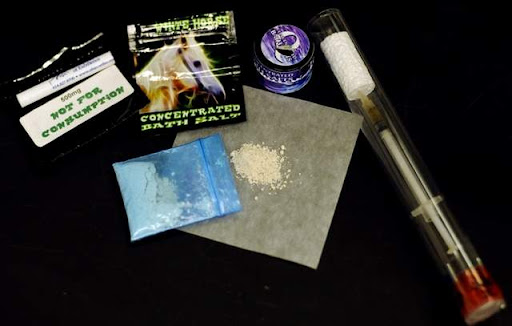
The U.S Drug Enforcement Agency's war on drugs continues with a nationwide ban of synthetic cocaine. Labeled as bath salts, the hallucinogenic drug has become more available in the Grand Junction area as part of a trend seen across the country. In response to increased emergency room visits, the federal agency has moved to emergency control these synthetic stimulants. This action makes it illegal to possess or sell Mephedrone, Methylenedioxypyrovalerone (MDPV), and Methylone or any products containing them for the next year. These chemicals are most often found in forms of 'legal ecstasy' or 'legal cocaine.' During the temporary ban, the DEA will team up with the U.S. Department of Health and Human Services to further study whether these chemicals should be permanently banned. In June, we introduced you to these bath salts in this article. Back then, they were an unregulated drug taking the place of recently banned synthetic forms of marijuana. "It is actually like a synthetic cocaine slash methamphetamine," Jim Schrant with the DEA told us at the time. "So, it's really the worst of both." The bath salts sell at a price of $40 per gram. They are mainly sold at smoke shops. But, in June, Schrant told us that his agency could not find any local dealers. Today, there are at least two. "They're putting it into packaging which is pleasing to the eye with market names of "Blue Dreams," things like that," Schrant said. "And, they're intentionally trying to target that young adult crowd." As part of this emergency control, businesses and citizens have 30 days to get rid of the banned products. At that time, the DEA will publish a Final Order in the Federal Register making the drugs Scheduled 1 substances. That category is the harshest and is reserved for unsafe, highly abused chemicals with no known medical use in the U.S. Violating that law is punishable by jail time. Employees at smoke shops in the area tell us that synthetic cocaine isn't that popular. But, local high school students have heard all about it. "I don't think they care if it's legal," Grand Junction High School freshman Hannah Rady said of some of her classmates. "Nobody does." Just like K2 and Spice, bath salts are labeled "not for human consumption." But, these students say that is not stopping anyone and neither is the law. "People just ask me 'Have you done spice before?' I'm just like, 'No,'" GJHS freshman Emilio Lazcano said. He knows Governor John Hickenlooper made those forms of synthetic marijuana illegal starting July 1, but he says fellow classmates continue to tell bother about it. "They're like 'Oh, well you're supposed to smoke it like this and that,' and I'm like 'Oh, well cool. I'm not really into that stuff.'" "They tell us that it doesn't make their eyes red, so it's way easier to bypass by your parents," GJHS junior Joe Gedscad added. The most common symptoms of these synthetic stimulants include impaired perception, reduced motor control, disorientation, extreme paranoia, and violent episodes. The DEA says the long-term physical and psychological effects are not known but potentially severe. Including Colorado, 33 states have already taken action to control or ban other synthetic stimulants. Most states pass these laws after the DEA files an emergency control on certain chemicals.

Wednesday, 7 September 2011

Drug couriers have started to smuggle hashish into Finland inside their bodies in small swallowable packets.


      According to the Customs, the first attempts to bring internally concealed hashish into the country were observed in 2008. In the past several months, however, the phenomenon has become markedly more common.       Customs Inspector Tero Virtanen explains that since last December more than a dozen individuals have been stopped and caught on arrival at Helsinki-Vantaa International Airport for trying to smuggle in hashish inside the body.       ”Most of them have been men between the ages of 20 and 35. They are professional couriers, and some of them have told the officials that they have made several successful runs to Finland before getting caught. Some of them have also performed deliveries to other Nordic countries.”       According to Virtanen, the Customs have confiscated more than ten kilograms of cannabis from the mules. The street value of the lot would have been in the region of EUR 100,000.       In addition to this, the officials have learned in the preliminary investigations about the importation of additional roughly 10 kg of hashish.       “Thanks to the couriers, several different criminal organisations have now been tracked down in Finland. At the receiving end of the chain there are around a dozen suspects and the spectrum of their nationalities is broad”, Virtanen notes.       The Customs believe that hash has been distributed, or was supposed to be distributed, across Southern Finland.       The amounts of cannabis that the couriers have swallowed in small packages have varied from half a kilogramme to a kilo.       The smugglers doing the ingesting of the small packages have been natives of Spain, Portugal, Morocco, the Czech Republic, and Slovakia.       Customs officials suspect that the smuggled substance has generally originated from Morocco and Spain.       One of the couriers told the authorities that his fee for the gig was EUR 700.       The use of this technique to bring in hashish is a new development: traditionally the internally concealed drugs smuggled into the country have been substances appreciably stronger than hash, such as cocaine and heroin.       “Larger hashish consignments are still brought in through other means, but this is a quick way to import narcotics. There will always be a ready market for cannabis”, Virtanen says.

Described in the Alcoholics Anonymous Big Book as "cunning, baffling, powerful," addiction often seems as inscrutable as the human mind itself. Its reach is widespread

Described in the Alcoholics Anonymous Big Book as "cunning, baffling, powerful," addiction often seems as inscrutable as the human mind itself. Its reach is widespread: Else Pedersen, executive director of Bridge House, estimates 10 to 15 percent of the population has an addiction. "We all either have this or have some strong primary connection to it," she says. "This is everywhere, and it needs to be dealt with like the medical issue it is. We need to give it the same attention we give other diseases that are progressive, pervasive and potentially lethal."


  Last month, The American Society of Addiction Medicine (ASAM) made a big step toward widespread recognition of addiction as a medical issue rather than a behavioral issue or moral failing. It released a new definition which states addiction is a chronic, underlying, largely genetic brain disease.

  "The disease is about brains, not drugs," former president of ASAM Dr. Michael Miller stated in a press release. "It's about underlying neurology, not outward actions." Miller oversaw a four-year effort by more than 80 addiction experts and neuroscience researchers which yielded the new definition.

  Dr. Ken Roy, medical director of Addiction Recovery Resources Incorporated in Metairie, calls it a game-changer.

  "This is a definition based on a consensus of expert opinion and scientific literature that changes the understanding of addiction from a choice or a self-treatment to a condition of brain structures that basically compels behavior outside the ability to choose," he says. "It's also pivotal in the sense that it equates a compulsion to use chemicals with compulsions to have other kinds of behaviors such as food or gambling or sex. (It is) the same disease state. Addiction is not a choice."

  The new definition reveals addiction to be a primary disease, much like diabetes or cardiovascular disease. It can be a root cause behind other behavioral, social and psychological problems like depression, cognitive distortions, social isolation and anxiety. According to ASAM's definition, "genetic factors account for about half the likelihood that an individual will develop addiction" — meaning if one of your parents is or was an addict, you are genetically predisposed to developing addiction.

  Since addiction has physical, neurobiological causes, one would expect the brains of addicts to function differently than the brains of non-addicts. This is exactly what happens, says Dr. Howard Wetsman, medical director at Townsend, a network of local outpatient addiction treatment centers. Many (not all) addicts have a morphology (or mutation) in the genes associated with the production, release, reuptake and metabolizing of dopamine, a neurotransmitter associated with pleasure and reward. Wetsman refers to the intricate factors governing normal dopamine levels as "dopamine tone."

   "Generally, people who have a low dopamine tone are not able to make great attachments and feel rewards from normally rewarding activities, and that is when the drug or behavior comes along," he says. " Our society likes to think that drugs cause addiction. It's actually the other way around for most people with addiction. The addiction causes the drug use," he writes in his book, QAA: Questions and Answers on Addiction.

  The genetic factor is so pervasive that Wetsman has instituted genetic testing as part of Townsend's intake procedure. "The test identifies two dozen genetic mutations in the brain that relate to symptoms of addiction," says John Antonucci, an intake coordinator at Townsend who also is recovering from addiction. "This information helps fine-tune medical interventions, and it is amazing when you take a patient and their family members, and they realize it really is a biological brain disease. I like to equate it to seeing the X-ray when you have a broken arm. And I have seen family members break down and cry when they realize all this time, their kids weren't doing this to spite them. They were doing it because they were sick."

  Though Antonucci says nine out of 10 of Townsend's patients report addiction in their family trees, there are some addicts without a family history or genetic indication of the disease (but because addiction can express itself through many different compulsions, from overeating to compulsive spending, it can sometimes be hard to trace, Wetsman says). New Orleans native, Xavier University alumnus, father of five and recovering addict Darryl Rouson, now a Florida state representative, had no known family history of addiction.

  "My mother was known to cut her beer with 7-Up, and my dad drank three or four times a year," says Rouson, who began drinking and using cocaine in the '80s. "I wasn't drinking for the social nature, I wanted the effect, and I wanted it quickly, and for a long time. For me, it started out filling what I thought were voids in my life, low self-esteem: I never thought I was cute enough, strong enough, athletic enough or smart enough, and I was always doing things to compensate for these lacks."

  Rouson says he has been through eight treatment programs and is well-versed in the genetic component of addiction, but he has never been tested for the morphologies. Though genetic testing can provide clarity to a diagnosis of addiction, and a basis for what medications will best normalize individuals' brain chemistry, neither testing nor medications are necessary for recovery. "There are millions of people who have gotten sober by going to 12-step meetings (like Alcoholics Anonymous or Narcotics Anonymous). For some people, that works," says Jo Cohen, clinical director of New Orleans Bridge House and Grace House. "We support the science, but like everything else in treatment, it's an individualized approach."

  Although people do not choose to become addicts, they do have choices over how they manage the disease. Addiction requires ongoing treatment, which varies from person to person — some may benefit from ongoing use of medications like Suboxone, some may require long-term inpatient treatment, others may stay sober simply by attending 12-step meetings. Antonucci stresses that a strong routine of recovery-related activities like meetings or volunteering helps people maintain sobriety, as does access to help from addiction doctors. "This is a chronic disease like diabetes or hypertension," he says. "If you are diabetic, you get exercise and take insulin, but there are times you need to check up with your endocrinologist."

    Rouson manages his addiction by attending 12-step meetings, sponsoring other recovering addicts, reading Alcoholics Anonymous literature, and giving back to the community by sharing his story at prisons and recovery centers. He will speak at Xavier Wednesday, Sept. 14, to celebrate National Recovery Month.   

  "One of the critical reasons why I got clean was I was given a choice," he says. "(My wife) Ruby was dead and I had taken her $80,000 life insurance policy and spent $60,000 on cocaine. I was in a courtroom with my wife's family and they were trying to convince the judge to take my four-year-old son. The judge said I could either choose Daniel or drugs, but after today, I would not have both. I chose my son."

  Antonucci and Rouson both say their community outreach work, which is a tenant of Alcoholics Anonymous (the 12th step states, "Having had a spiritual awakening as the result of these steps, we tried to carry this message to alcoholics, and to practice these principles in all our affairs"), is essential to their ongoing sobriety. And though there may seem to be a disconnect between the scientific, biologically based addiction definition and the spiritually based 12-step programs, ASAM's research scientically supports the activities recovering addicts undertake in 12-step recovery programs as ways to maintain sobriety.

  "Our medical approach to addiction dovetails very nicely into 12-step recovery, because there is a scientific basis behind how it works," Antonucci says. "Part of my recovery is, I serve food to homeless people every Saturday night, and afterwards, I feel great. Why do I feel great? My hedonic tone has gone up. Doing something really healthy for the community has changed my brain chemistry."

  Wetsman agrees that engaging in charitable activities can normalize dopamine levels. "You get dopamine lowering from being isolated and feeling less-than," he says. "You can't feel isolated and less than when you help somebody else — dopamine receptors actually physically gain in number. The receptors are much more plastic than we think."

  Pederson, Antonucci and medical professionals across the board hope the new definition of addiction will serve to remove much of the shame and stigma surrounding the disease, which in turn will facilitate recovery for the millions who suffer from addiction.

  "When people have a strong understanding about the disease, that's when the miracles happen, and treatment can be extremely successful," Antonucci says. "Don't be afraid to get better. This can work for you, too. Give yourself a chance."

Thursday, 25 August 2011

MORE people are admitted to hospital because of alcohol-related problems in the North East than any other region, new figures have revealed.


But other figures showed that less crime was linked to alcohol in the region than anywhere else.

Leading alcohol campaigners last night called for action after alcohol- related hospital admission numbers soared in every part of the country.

In the North East, there were 2,406 admissions for alcohol per 100,000 people compared with a national average of 1,743. This was up by almost 900 compared with five years ago.

The director of Balance, the North East Alcohol Office, called for Government action to stop the worrying trend.

Colin Shevills said: “We need the Government to provide the right kind of action to help people reduce their drinking.

“Alcohol needs to be priced more sensibly, promotions need to be restricted, as does advertising. Alcohol is available 24 hours a day, seven days a week which is adding to the problems we are facing.


“The region has had the highest alcohol-related hospital admissions for some time, so these latest figures are no surprise but worrying.

“The fact is that there are too many people drinking too much, too often.”

In our region, the highest rate of hospitalisations was in the local authority area of North Tyneside, with 2,654.

The report, from the North West Public Health Observatory at Liverpool John Moores University, showed there were 1.1 million admissions in England relating to alcohol in 2009/10 – 879 more per day than five years previously.

North Tyneside was also ranked as the area with the most estimated binge drinkers in the country, with research showing 33.2% of people are considered to binge on alcohol.

Other detail, drawn from official crime statistics, shows that nationally there were 7.6 crimes per 1,000 people committed that were linked to alcohol.

The North East had the lowest figures for any region though with an average of 5.7.

Tuesday, 23 August 2011

A MAN died after suffering brain damage caused by drinking too much water

A MAN died after suffering brain damage caused by drinking too much water, his family have claimed.

Matthew Ellis, 29, downed at least 20 pints of water after a night out before collapsing at his father’s home.

His heartbroken family believe his drink was spiked with ecstasy, leaving him desperate for “pints and pints” of water the next day.

Advertisement >>

They said the liquid he drank caused salt levels in his body to dive, bringing on a rare brain condition called extrapontine myelinolysis.

Matthew, from Gleadless, Sheffield, collapsed the day after a Boxing Day night out last year and spent 32 weeks in hospital before dying of a chest infection on August 4.

An inquest into the heating engineer’s death has been opened and adjourned.

His grieving mum, Maureen Ellis, 62, said: “He never took drugs. We are told drinking lots of water is good for you but what happened should be a warning.”

Friday, 19 August 2011

A sweeping new definition of addiction stakes out controversial positions that many, including the powerful psychiatric lobby are likely to argue with.

If you think addiction is all about booze, drugs, sex, gambling, food and other irresistible vices, think again. And if you believe that a person has a choice whether or not to indulge in an addictive behavior, get over it. The American Society of Addiction Medicine (ASAM) blew the whistle on these deeply held notions with its official release of a new document defining addiction as a chronic neurological disorder involving many brain functions, most notably a devastating imbalance in the so-called reward circuitry. This fundamental impairment in the experience of pleasure literally compels the addict to chase the chemical highs produced by substances like drugs and alcohol and obsessive behaviors like sex, food and gambling.

The definition, a result of a four-year process involving more than 80 leading experts in addiction and neurology, emphasizes that addiction is a primary illness—in other words, it’s not caused by mental health issues such as mood or personality disorders, putting to rest the popular notion that addictive behaviors are a form of "self-medication" to, say, ease the pain of depression or anxiety.

Indeed, the new neurologically focused definition debunks, in whole or in part, a host of common conceptions about addiction. Addiction, the statement declares, is a “bio-psycho-socio-spiritual” illness characterized by (a) damaged decision-making (affecting learning, perception, and judgment) and by (b) persistent risk and/or recurrence of relapse; the unambiguous implications are that (a) addicts have no control over their addictive behaviors and (b) total abstinence is, for some addicts, an unrealistic goal of effective treatment.

The bad behaviors themselves are all symptoms of addiction, not the disease itself. "The state of addiction is not the same as the state of intoxication," the ASAM takes pains to point out. Far from being evidence of a failure of will or morality, the behaviors are the addict's attempt to resolve the general "dysfunctional emotional state" that develops in tandem with the disease. In other words, conscious choice plays little or no role in the actual state of addiction; as a result, a person cannot choose not to be addicted. The most an addict can do is choose not to use the substance or engage in the behavior that reinforces the entire self-destructive reward-circuitry loop.

Yet ASAM pulls no punches when it comes to the negative consequences of addiction, declaring it an illness that “can cause disability or premature death, especially when left untreated or treated inadequately.”

The new definition leaves no doubt that all addictions—whether to alcohol, heroin or sex, say—are fundamentally the same. Dr. Raju Haleja, former president of the Canadian Society for Addiction Medicine and the chair of the ASAM committee that crafted the new definition, told The Fix, “We are looking at addiction as one disease, as opposed to those who see them as separate diseases. Addiction is addiction. It doesn’t matter what cranks your brain in that direction, once it has changed direction, you’re vulnerable to all addiction." That the society has stamped a diagnosis of sex or gambling or food addiction as every bit as medically valid as addiction to alcohol or heroin or crystal meth may spark more controversy than its subtler but equally far-reaching assertions.

The new definition comes as the American Psychiatric Association (APA) is undertaking a highly publicized, decade-in-the-making revision of its own definition of addiction in its Diagnostic and Statistical Manual of Mental Disorders—the bible of the mental health profession. The APA’s DSM will have a larger effect on public health policies that guide addiction treatment, largely because insurance companies are mandated by law to use the DSM diagnostic categories and criteria to decide which treatments they will pay for.


Thursday, 4 August 2011

More than a third of British adults who own a smartphone have admitted they are "highly addicted" to it and cannot bear to put it down, not even in the toilet.


Research for the broadcasting watchdog Ofcom has found new evidence of how devices such as iPhones, Blackberrys and Androids affect our behaviour.
Smartphone users are more likely to have their phones switched on 24 hours a day and would wake up in the night to answer or use it.
Social networking sites such as Facebook and Twitter have also lead to owners cutting down on their TV viewing and reading.
Six out of 10 smartphone users aged 12 to 15-years-old, or 60%, said they had a high level of addiction, compared to 33% with a regular mobile phone.
The Ofcom communications market report for 2011 says 18% of users will use their device in a theatre or cinema despite knowing it should be switched off - this compares to 10% of other mobile phone users.

Wednesday, 27 July 2011

Amy Winehouse's death prompts review of drug rehab waiting times

The star’s father claimed to mourners at her funeral yesterday that addicts face a two-year wait for rehab on the NHS.
In an emotional eulogy to his 27-year-old daughter, Mitch Winehouse said he hoped her death would prompt greater awareness of addicts’ plight.
Keith Vaz, chairman of the Home Affairs Select Committee, today pledged to back Mr Winehouse’s campaign and investigate the speed of access to rehab.
Paying tribute to his daughter yesterday at Edgwarebury Cemetery, north London, Mr Winehouse, 58, said: “Three years ago, Amy conquered her drug dependency, the doctors said it was impossible but she really did it.
"In this country, if you cannot afford a private rehabilitation clinic, there is a two-year waiting list for help. With the help of Keith Vaz MP, we are trying to change that."

Mr Winehouse gave evidence to the Home Affairs committee two years ago on the cocaine trade, claiming that many drug users were so desperate for treatment that they committed crimes so they would be fast-tracked into rehab.
Mr Vaz said today: “Mitch Winehouse gave powerful evidence to the Home Affairs Select Committee during our inquiry into drugs in 2009.
“Drawing on his personal experience he highlighted the long delay in accessing treatment for those with addiction. Two years on we need to revisit this issue to see if anything has improved.
“I am very happy to help Mitch in any way I can with his important campaign to help rehabilitate those most vulnerable in our society."
The claims over waiting times are disputed by the National Treatment Agency for Substance Misuse (NTA), which is part of the NHS.
It claims that in 2009/10, 94 per cent of patients waited less than three weeks for drug rehabilitation.
During that period, the NTA dealt with nearly 207,000 addicts, official figures show.
Winehouse was admitted to private rehabilitation clinics on a string of occasions during her battle with alcohol and drug addictions. The Grammy-award winning singer was found dead at her home in Camden, north London, on Saturday.
At a private funeral for close friends and family yesterday, Mr Winehouse said the singer was the happiest she had been for many years in the run up to her death and had managed to stop drinking.
"She said, 'Dad I've had enough of drinking, I can't stand the look on your and the family's faces anymore'. She was not depressed,” he said.
Referring to the night she died, he added: “She was in her room, playing drums and singing. As it was late, her security guard said to keep it quiet and she did.
“He heard her walking around for a while and when he went to check on her in the morning he thought she was asleep. He went back a few hours later, that was when he realised she was not breathing and called for help.
"But knowing she wasn't depressed, knowing she passed away, knowing she passed away happy, it makes us all feel better.
"I was in New York with my cousin Michael when I heard and straight away I said I wanted an Amy Winehouse Foundation, something to help the things she loved – children, horses, but also to help those struggling with substance abuse.”
Among the guests at the service were her boyfriend Reg Traviss, stylist Alex Foden, who has been credited with creating Winehouse's trademark beehive hairdo, producer Mark Ronson and singer Kelly Osbourne.
Following the service, Winehouse's body was taken to Golders Green Crematorium, where her grandmother was cremated in 2006.
A spokesman for the family said he understood Winehouse's ashes would be placed next to those of her grandmother. The singer had a close relationship with her grandmother and had a tattoo of her name – Cynthia – on her right arm.
The family began Shiva – a traditional period of mourning in the Jewish faith – after the service.
Relatives and friends congregated at the Southgate Progressive Synagogue in north London last night.
The funeral comes after police revealed they will have to wait up to four weeks for the results of toxicology tests to establish her cause of death.
A post-mortem examination has proved inconclusive and an inquest has been opened and adjourned with no cause of death given.
Mr Winehouse told the Home Affairs committee in 2009 that addicts he had interviewed a television documentary claimed they waited a year on average for rehab.
He said: "People are definitely committing offences so they can have a chance, and it's only a chance, of receiving treatment.
"The biggest impact on families is that there is very little help available to them, especially if their relative is a non-offending addict.
The problem we found in our research in London is that it's a year before any treatment can be given. It's very difficult and the reason for this is the majority of funding is taken up by the criminal justice system."